
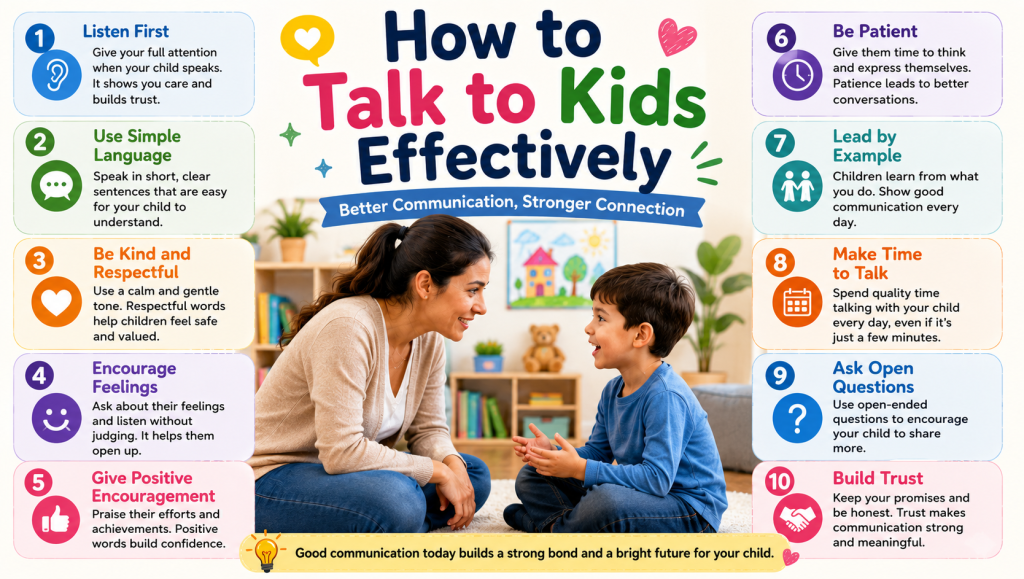
Communication is one of the most important skills parents, teachers, and caregivers can develop when raising children. The way adults speak to children has a lasting impact on their confidence, emotional well-being, and ability to express themselves. Effective communication helps children feel understood, respected, and valued, creating stronger relationships and a positive environment for learning and growth.
Talking to children is about more than giving instructions or correcting behavior. It involves listening carefully, encouraging open conversations, and responding with patience and kindness. When children feel comfortable sharing their thoughts and emotions, they are more likely to build trust, solve problems, and develop healthy communication skills that benefit them throughout life.
This article explores practical ways to talk to kids effectively and strengthen your connection with them every day.
Listen Before You Speak
Effective communication begins with listening. Children want to feel heard, just like adults do. When a child is speaking, give them your full attention by making eye contact, putting away distractions, and allowing them to finish without interruption. This shows that their thoughts and feelings are important.
Active listening also helps parents and teachers understand what a child is truly trying to express. Sometimes children struggle to find the right words, so listening patiently allows adults to respond with understanding instead of making assumptions. As children realize that their opinions matter, they become more confident in expressing themselves openly.
Use Simple and Clear Language
Children understand information better when it is explained in simple and age-appropriate language. Long lectures or complicated words can confuse young minds and make communication less effective. Instead, use short sentences and clear explanations that match the child’s level of understanding.
Giving one instruction at a time also helps children stay focused. Rather than overwhelming them with multiple directions, breaking tasks into smaller steps allows them to understand what is expected and complete each task successfully. Clear communication reduces frustration for both children and adults.
Speak with Kindness and Respect
Children learn how to communicate by observing the adults around them. Speaking with kindness, patience, and respect teaches children to treat others the same way. Even during difficult situations, using a calm tone helps children feel safe rather than frightened.
Respectful communication also means avoiding insults, shouting, or harsh criticism. Instead of focusing only on mistakes, guide children toward better choices by explaining what they can do differently. A supportive approach strengthens trust and encourages positive behavior over time.
Encourage Children to Express Their Feelings
Children experience many emotions but may not always know how to express them. Encourage them to talk about their feelings by asking open-ended questions such as, “How did that make you feel?” or “Can you tell me what happened?” These questions invite conversation instead of simple yes-or-no answers.
When children share their emotions, acknowledge their feelings without immediately judging or dismissing them. Letting children know that it is okay to feel sad, angry, or worried helps them develop emotional intelligence and healthier ways of managing their emotions.
Give Positive Encouragement
Positive words can have a powerful effect on a child’s confidence and motivation. Recognizing effort, celebrating small achievements, and offering sincere praise encourage children to continue learning and trying new things. Instead of only pointing out mistakes, notice what they are doing well and encourage them to keep improving.
Positive encouragement also helps children develop a growth mindset. They learn that making mistakes is a normal part of learning and that effort is just as valuable as success. This creates a supportive environment where children feel confident taking on new challenges.
Be Patient During Conversations
Children often need extra time to organize their thoughts and explain what they mean. Interrupting or rushing them may discourage them from speaking in the future. Being patient shows children that their ideas are worth listening to and that they do not have to fear making mistakes while communicating.
Patience is especially important when children are upset or emotional. Remaining calm allows adults to guide conversations more effectively and helps children learn how to handle difficult situations in a healthy way. A patient response often leads to better understanding and stronger relationships.
Lead by Example
Children learn communication skills by watching the adults in their lives. They observe how parents and teachers solve problems, express emotions, and speak to others. Demonstrating honesty, politeness, active listening, and respectful conversations provides children with positive examples they can follow.
Modeling good communication also includes admitting mistakes and apologizing when necessary. When adults show humility and respect, children learn that effective communication involves understanding, responsibility, and empathy.
Create Daily Opportunities to Talk
Busy schedules can sometimes reduce meaningful conversations with children. Setting aside time each day to talk without distractions helps strengthen family relationships and encourages children to share their experiences. Mealtimes, bedtime, or family walks provide excellent opportunities for relaxed conversations.
Regular communication helps parents notice changes in a child’s emotions, behavior, or concerns before they become bigger problems. It also creates a safe space where children know they can always ask questions or seek advice.
Conclusion
Talking to children effectively is about building trust, showing respect, and creating an environment where they feel comfortable expressing themselves. By listening carefully, using simple language, encouraging open conversations, and responding with kindness, parents and teachers can strengthen their relationships with children while supporting their emotional and social development.
Every conversation is an opportunity to teach, encourage, and inspire. When children feel heard and understood, they become more confident, communicate more openly, and develop valuable life skills that will benefit them throughout their lives. Strong communication today creates stronger relationships and brighter futures tomorrow.