
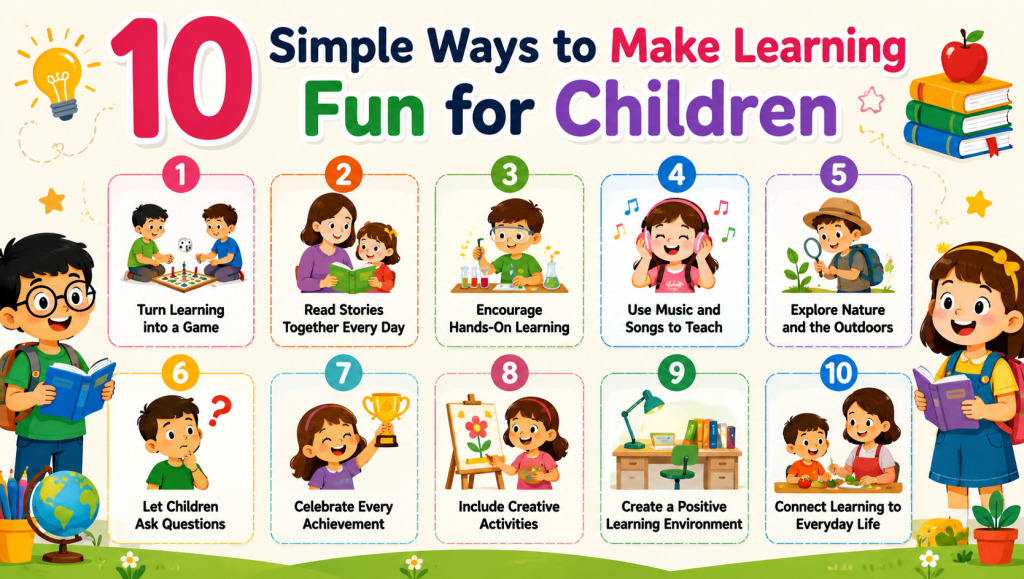
Learning is one of the most important parts of a child’s development, but it does not have to feel difficult or boring. Children are naturally curious and enjoy discovering new things when learning is presented in a fun and engaging way. By turning everyday activities into learning opportunities, parents and teachers can help children stay motivated, build confidence, and develop a lifelong love for education.
Making learning enjoyable also helps children improve their creativity, communication, and problem-solving skills. Instead of focusing only on books and worksheets, children can learn through games, stories, art, music, and real-life experiences. These activities make lessons easier to understand while keeping children excited to explore new ideas.
In this article, we will explore ten simple ways to make learning fun for children and create positive learning experiences both at home and in the classroom.
1. Turn Learning into a Game
Children love playing games, so adding educational games to their daily routine is an excellent way to make learning enjoyable. Simple activities such as alphabet matching, number puzzles, word searches, and memory games help children practice important skills without feeling like they are studying.
Parents and teachers can also create friendly competitions with small rewards to keep children motivated. When learning feels like play, children become more engaged and are more likely to remember what they have learned.
2. Read Stories Together Every Day
Reading is one of the best ways to improve a child’s language and imagination. Spending just a few minutes each day reading together helps children build vocabulary, strengthen listening skills, and develop a love for books.
Parents can make story time even more exciting by using different voices for characters, asking questions about the story, and encouraging children to predict what will happen next. These simple interactions make reading enjoyable while improving comprehension and communication skills.
3. Encourage Hands-On Learning
Children understand concepts better when they can touch, build, and experiment. Hands-on learning activities such as painting, crafts, science experiments, gardening, and cooking allow children to learn by doing rather than simply listening.
These practical experiences improve creativity, fine motor skills, and critical thinking. They also help children gain confidence because they actively participate in the learning process instead of only observing.
4. Use Music and Songs to Teach
Music makes learning more enjoyable and helps children remember information more easily. Singing alphabet songs, counting rhymes, and educational music introduces important concepts in a fun and memorable way.
Dancing along with songs also keeps children physically active while improving coordination and concentration. Music creates a positive atmosphere where learning feels exciting instead of stressful.
5. Explore Nature and the Outdoors
The outdoors provides endless learning opportunities for children. A simple walk in the park, a visit to the garden, or observing birds and insects can teach valuable lessons about science and the environment.
Outdoor activities also encourage children to ask questions, observe their surroundings, and stay physically active. Learning outside the classroom helps children connect their lessons with the real world and keeps their curiosity alive.
6. Let Children Ask Questions
Curiosity is the foundation of learning. Instead of giving children all the answers immediately, encourage them to ask questions and explore possible solutions on their own.
When children are allowed to investigate and discover answers, they develop critical thinking and problem-solving skills. This approach also helps them become more confident learners who enjoy exploring new ideas.
7. Celebrate Every Achievement
Every small success deserves recognition. Praising children for their effort, progress, and achievements motivates them to keep learning and trying new things.
Simple words of encouragement, stickers, certificates, or extra playtime can make children feel proud of their accomplishments. Positive reinforcement builds confidence and helps children develop a growth mindset.
8. Include Creative Activities
Creativity allows children to express themselves while developing important thinking skills. Activities such as drawing, painting, storytelling, building models, and role-playing encourage imagination and innovation.
Creative learning also teaches children that there can be more than one solution to a problem. As they experiment with different ideas, they become more confident and willing to explore new challenges.
9. Create a Positive Learning Environment
A calm, organized, and welcoming learning space helps children stay focused and comfortable. Whether learning at home or in school, providing a quiet area with books, learning materials, and colorful educational resources encourages children to participate more actively.
A positive environment also includes patience, encouragement, and emotional support. When children feel safe and respected, they become more confident in asking questions and sharing their ideas.
10. Connect Learning to Everyday Life
Learning becomes more meaningful when children see how it applies to their daily lives. Parents can involve children in activities such as shopping, cooking, measuring ingredients, counting objects, or planning family events to teach practical math, language, and problem-solving skills.
These everyday experiences help children understand that learning is not limited to the classroom. Instead, they begin to see education as a valuable part of their daily routine and future success.
Conclusion
Making learning fun does not require expensive tools or complicated teaching methods. Simple activities such as reading together, playing educational games, exploring nature, encouraging creativity, and celebrating achievements can transform the learning experience for every child. These enjoyable methods help children stay curious, build confidence, and develop essential academic and life skills.
When parents and teachers work together to create a positive and engaging learning environment, children are more likely to develop a lifelong love for education. By making learning enjoyable every day, we can inspire children to explore, grow, and reach their full potential while building a strong foundation for future success.