
Many children think that studying is boring because they often associate it with long hours of reading, memorizing facts, and completing homework. However, learning does not have to feel like a difficult task. With the right approach, study time can become an enjoyable experience that keeps children motivated, curious, and excited to learn new things. When learning is fun, children are more likely to stay focused, remember information, and develop a positive attitude toward education.
Parents and teachers play an important role in creating an engaging learning environment. By introducing creative activities, educational games, and interactive learning methods, they can help children see studying as an exciting adventure instead of a daily responsibility. Simple changes in the way lessons are presented can make a significant difference in a child’s interest and confidence.
This article explores practical ways to turn study time into fun time and help children build a lifelong love for learning.
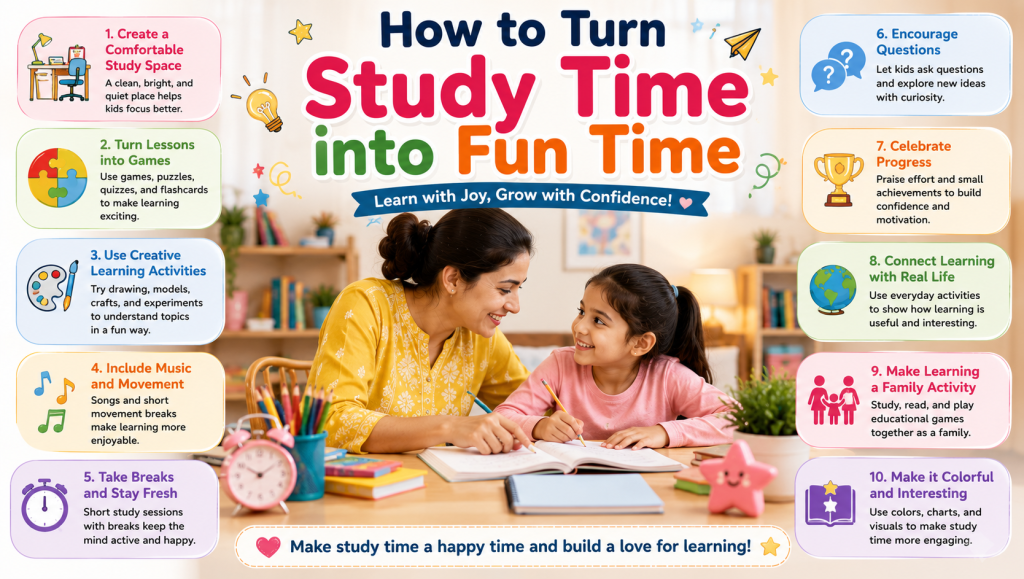
Create a Comfortable Study Space
A well-organized and comfortable study area helps children concentrate and enjoy learning. Choose a quiet place with good lighting, a comfortable chair, and a tidy desk where children can focus without distractions. Adding colorful learning materials, educational posters, and books can make the space feel welcoming and inspiring.
Allow children to personalize their study area with artwork, motivational quotes, or colorful stationery. A pleasant learning environment encourages them to spend more time studying and helps them develop positive study habits.
Turn Lessons into Games
Games are one of the easiest ways to make studying enjoyable. Educational board games, quizzes, puzzles, flashcards, and spelling challenges transform ordinary lessons into exciting activities. Instead of feeling like work, children see learning as a fun challenge they want to complete.
Parents and teachers can also introduce friendly competitions with small rewards for effort and participation. These activities keep children motivated while helping them improve memory, problem-solving, and critical thinking skills.
Use Creative Learning Activities
Children learn best when they can actively participate in the learning process. Drawing, painting, building models, science experiments, and craft projects help children understand concepts through hands-on experiences rather than simply reading from books.
Creative activities encourage imagination while making difficult topics easier to understand. They also allow children to express their ideas in different ways, making learning more enjoyable and memorable.
Include Music and Movement
Music can make studying more exciting and help children remember information more effectively. Educational songs, rhymes, and musical activities make subjects like mathematics, language, and science easier to understand. Singing and dancing while learning also improves memory and keeps children actively engaged.
Short movement breaks between study sessions are equally important. Stretching, dancing, or playing a quick game helps children refresh their minds before returning to their lessons with renewed energy and focus.
Break Study Time into Small Sessions
Long study sessions can make children feel tired and lose interest. Dividing learning into shorter sessions with regular breaks helps them stay focused and motivated. For example, studying for 20 to 30 minutes followed by a five-minute break allows children to absorb information more effectively.
During breaks, children can stretch, drink water, or enjoy a quick physical activity before returning to their work. This balanced approach reduces stress and makes studying feel more manageable.
Encourage Questions and Curiosity
Children naturally enjoy discovering new things. Encourage them to ask questions about what they are learning instead of simply memorizing information. Responding to their curiosity with patience helps them think critically and develop a deeper understanding of each topic.
Parents and teachers can also ask open-ended questions that encourage children to explain their ideas and solve problems independently. This interactive approach keeps learning interesting and builds confidence.
Celebrate Progress and Achievements
Recognizing children’s efforts motivates them to continue learning. Praise their hard work, celebrate improvements, and acknowledge small achievements with encouraging words or simple rewards. Positive reinforcement helps children feel proud of their progress and inspires them to keep trying.
Instead of focusing only on perfect results, appreciate the effort children put into learning. This encourages a growth mindset where mistakes become valuable learning opportunities rather than reasons to give up.
Connect Learning with Everyday Life
Children understand lessons better when they can see how knowledge applies to real life. Parents can involve children in cooking to practice measuring, shopping to improve math skills, gardening to learn about science, or reading recipes to strengthen language abilities.
These real-world experiences make learning meaningful and show children that education is useful in everyday situations. As a result, they become more interested in exploring and applying what they have learned.
Make Learning a Family Activity
Studying becomes more enjoyable when the whole family gets involved. Reading together, solving puzzles, playing educational games, or discussing interesting topics creates valuable learning experiences while strengthening family relationships.
Children are more motivated when they see parents showing interest in education. Family learning activities also provide opportunities for encouragement, teamwork, and meaningful conversations that support a child’s overall development.
Conclusion
Turning study time into fun time is not about making learning easier—it is about making it more engaging, interactive, and enjoyable. By creating a positive learning environment, using games and creative activities, encouraging curiosity, and celebrating progress, parents and teachers can help children develop a genuine love for learning. These simple strategies improve focus, confidence, and academic success while making education an exciting part of everyday life.
When children enjoy the learning process, they become more motivated to explore new ideas, solve problems, and achieve their goals. A fun approach to studying not only improves school performance but also builds the curiosity and confidence needed for lifelong learning.