
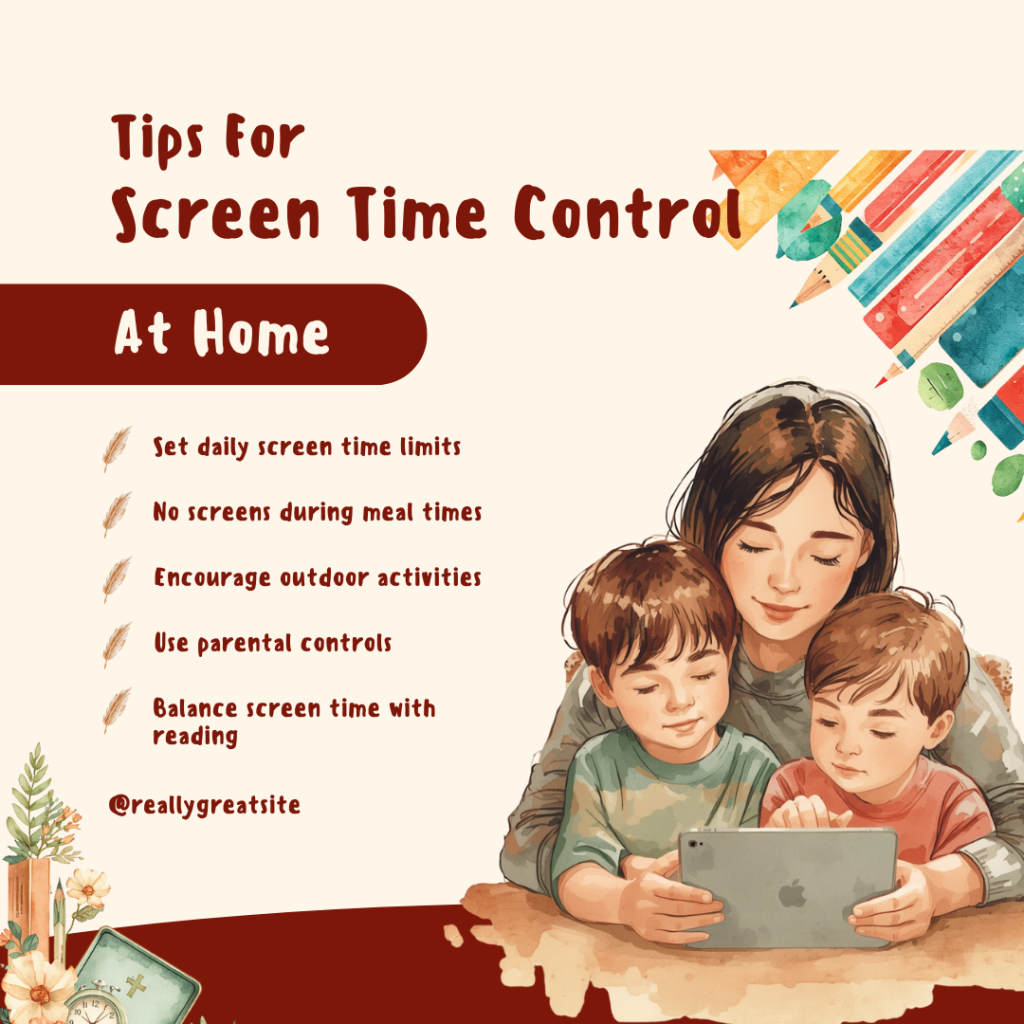
In today’s digital era, screen time has become one of the most challenging issues for parents. Children are growing up surrounded by smartphones, tablets, televisions, and gaming devices. While technology has educational benefits, excessive screen time can negatively impact a child’s behavior, sleep, studies, emotional development, and social skills.
Many parents struggle with how to control screen time for kids at home without creating conflict, arguments, or emotional stress. The goal is not to completely remove technology, but to create a healthy balance where children use screens responsibly.
This article provides a complete, practical, and psychology-based guide to help parents manage and control screen time effectively at home.
Understanding Screen Time in Children
Screen time refers to the time children spend using digital devices such as mobile phones, computers, tablets, television, and gaming consoles.
There are two types of screen time:
Educational screen time, which includes learning activities, online classes, and skill development content.
Recreational screen time, which includes games, social media, videos, and entertainment content.
While educational screen time can be beneficial, excessive recreational screen time can lead to behavioral and developmental issues.
Why Children Spend Too Much Screen Time
There are several reasons why children develop excessive screen habits.
One major reason is lack of alternative activities. When children are bored, they naturally turn to screens for entertainment.
Another reason is weak routines. Without structure, children spend uncontrolled time on devices.
Parents sometimes use screens as a way to keep children quiet, which gradually becomes a habit.
Modern apps and games are designed to be addictive, which increases usage time.
Emotional reasons also play a role. Children may use screens when they feel lonely or emotionally disconnected.
Effects of Excessive Screen Time
Too much screen time can affect children in many ways.
It reduces attention span and makes it difficult to focus on studies.
It can negatively impact sleep quality and create irregular sleep patterns.
It may reduce physical activity, leading to health issues.
Excessive screen time can also affect emotional development in children by reducing face-to-face communication.
Behavioral issues such as irritability, anger, and impatience may also increase.
How to Control Screen Time for Kids at Home
Step 1: Set Clear Screen Time Rules
Children need structure and clarity. Parents should define clear rules about when and how long screens can be used.
Rules should include fixed timings, such as after homework or limited hours per day.
Consistency is more important than strictness.
Step 2: Create a Daily Routine
A structured routine helps naturally reduce screen dependency.
A healthy routine includes study time, play time, family time, and rest time.
When children follow a schedule, screen usage automatically becomes controlled.
Step 3: Remove Screens from Key Areas
Screens should not be allowed in bedrooms, dining areas, or study tables.
This helps children separate screen time from other activities.
Step 4: Replace Screen Time with Activities
Simply reducing screen time is not enough. Children need alternatives.
Parents should introduce:
Physical activities like outdoor games and sports
Creative activities like drawing and crafts
Reading books and storytelling
Family interaction activities
Step 5: Be a Role Model
Children learn by observing parents.
If parents use mobile phones excessively, children will copy the same behavior.
Parents should reduce unnecessary screen usage and spend more time in real-life interaction.
Step 6: Use Positive Reinforcement
Instead of punishment, positive reinforcement works better.
Parents should appreciate children when they follow screen rules or reduce usage.
Rewards and encouragement help build long-term habits.
Step 7: Improve Emotional Connection
Many children use screens due to emotional gaps.
Parents should spend quality time with children, listen to them, and engage in meaningful conversations.
Strong emotional connection reduces screen dependency naturally.
Practical Screen Time Control Strategies
One effective strategy is gradual reduction instead of sudden restriction.
Another strategy is “screen-free hours” where the whole family avoids devices together.
Parents can also use activity-based rewards where screen time is earned through completing responsibilities.
Family games and outdoor activities help replace digital habits.
Real-Life Example
A 9-year-old child was spending more than five hours daily on mobile games and videos. His academic performance was decreasing, and he became more irritable when screen time was reduced.
His parents introduced a structured routine, reduced screen time gradually, and added outdoor play activities. They also increased family interaction time.
Within a few weeks, the child started showing better behavior, improved focus, and reduced dependency on screens.
This shows that consistency and patience are key to success.
Common Mistakes Parents Make
One common mistake is suddenly taking away devices, which leads to resistance.
Another mistake is inconsistent rules, where screen limits change frequently.
Some parents also use screens as rewards or punishments, which increases dependency.
Ignoring emotional needs of children can also increase screen addiction.
Expert Parenting Strategies
Experts recommend balanced parenting rather than strict control.
Children respond better to guidance, structure, and emotional support.
The focus should be on habit building rather than punishment.
Consistency and patience are the most important factors in success.
Frequently Asked Questions
How can I control screen time for kids at home
By setting rules, creating routines, replacing screen time with activities, and improving emotional connection.
What is healthy screen time for children
It depends on age, but generally 1–2 hours of controlled usage is recommended.
Is punishment effective for screen addiction
No, positive reinforcement and structured guidance are more effective.
What activities reduce screen time
Outdoor play, reading, creative arts, and family interaction.
Conclusion
Screen time control for kids at home is not about removing technology completely but about creating a healthy balance. When parents set clear rules, provide alternatives, and build emotional connections, children naturally reduce screen dependency.
The goal is to raise children who can use technology responsibly while also enjoying real-life activities, learning, and social interaction.
Call to Action
MotherChild.Care helps parents with:
Child behavior development
Screen time control programs
Confidence building in children
Study success guidance
Contact us:
Email: info@motherchild.care