
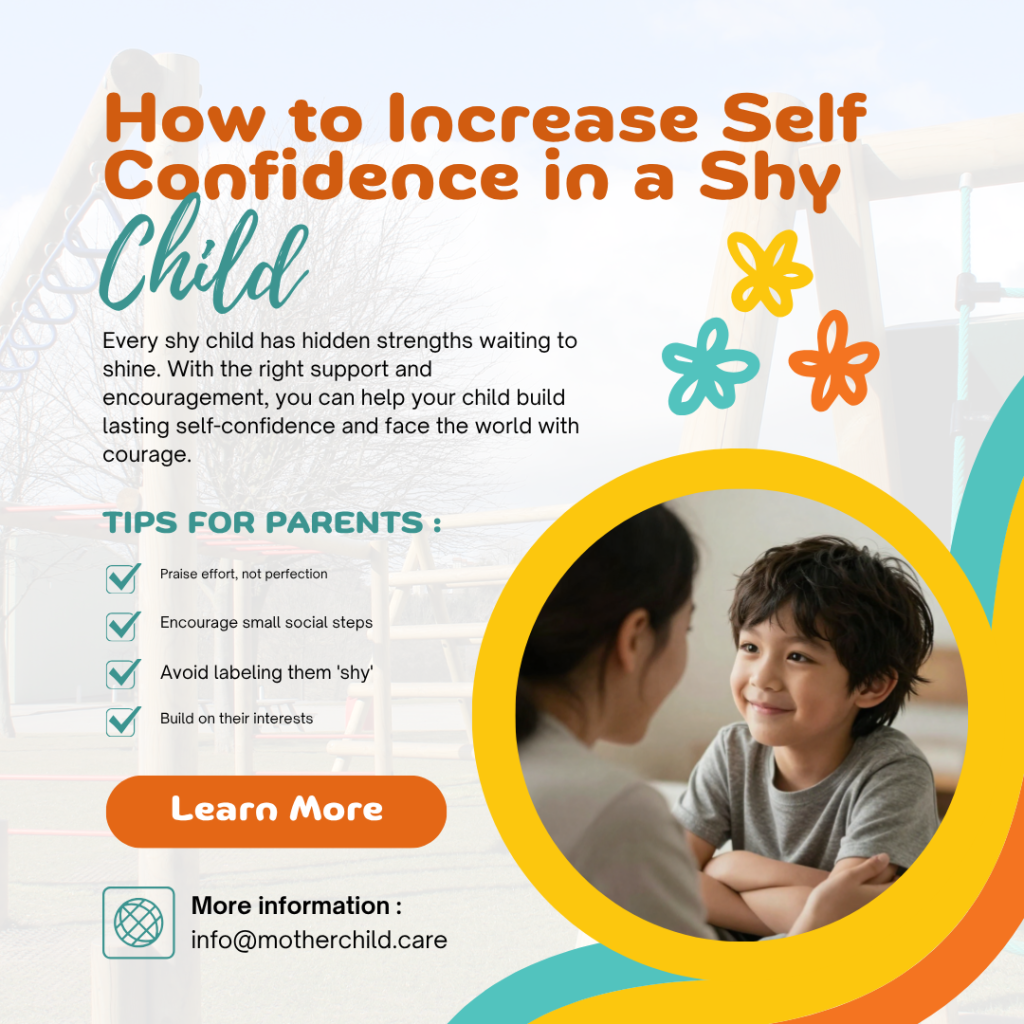
Shyness in children is very common, but when it becomes extreme, it can affect their learning, communication, social development, and overall personality growth. Many parents worry when their child avoids speaking in front of others, hesitates to participate in activities, or struggles to express feelings.
The important thing to understand is that a shy child is not a weak child. Shyness is often a result of personality type, emotional environment, past experiences, or lack of confidence-building opportunities.
Parents often search for how to increase self confidence in a shy child because they want a long-term, gentle, and effective solution that does not involve pressure or force.
This guide explains in detail how parents, teachers, and guardians can support a shy child step by step using proven parenting strategies and emotional development techniques.
Understanding Shyness and Confidence in Children
Shyness in children is a behavioral response where the child feels uncomfortable in social situations or avoids attention from others. It is often linked with low self-esteem in children and lack of exposure to social interaction.
Self-confidence is the opposite of fear. It is the internal belief that “I can try, I can speak, and I can learn even if I make mistakes.”
In child behavior development, confidence is built through repeated positive experiences. When children feel safe, accepted, and encouraged, their confidence naturally increases.
Emotional development in children plays a major role here. A child who feels emotionally secure is more likely to express themselves freely and interact with others.
Causes of Low Confidence in Shy Children
Shyness and low confidence can develop due to multiple reasons.
One major cause is overprotective parenting. When parents do everything for the child, the child does not learn independence or decision-making skills.
Another cause is lack of social exposure. Children who do not interact with peers often feel uncomfortable in social situations.
Negative experiences such as criticism, comparison, or humiliation can also reduce confidence.
Some children are naturally sensitive. Without proper emotional support, this sensitivity can turn into shyness.
Excessive screen time can also reduce communication skills and increase isolation, leading to low confidence in kids.
Psychology Behind Shyness and Confidence
From a psychological perspective, confidence develops in the brain through repeated experiences of success and acceptance.
Children learn behavior patterns through observation and reinforcement. If a child receives encouragement, they gradually feel more confident. If they receive criticism, they may develop fear of failure.
The brain’s emotional center responds strongly to approval and rejection. Positive parenting strategies help strengthen emotional security, which is essential for building confidence.
Child motivation techniques also play a role. When children are motivated, they are more likely to participate and try new things.
Step-by-Step Guide: How to Increase Self Confidence in a Shy Child
Step 1: Create Emotional Safety
The first and most important step is making the child feel emotionally safe. A shy child needs to know that they are accepted without judgment.
Parents should avoid criticism and instead use supportive language. Statements like “It’s okay to try” or “I am proud of your effort” build emotional security.
Step 2: Start with Small Social Interactions
A shy child should not be forced into large groups immediately. Start with small and comfortable interactions such as speaking with family members or close friends.
Gradual exposure helps reduce fear naturally.
Step 3: Encourage Communication at Home
Home is the safest environment for building communication skills. Parents should talk to the child daily about their thoughts, feelings, and experiences.
This improves emotional development in children and builds confidence gradually.
Step 4: Appreciate Effort, Not Perfection
Instead of focusing on results, parents should appreciate effort. For example, if a child tries to speak in front of others, that effort should be praised even if the outcome is not perfect.
This strengthens self-esteem in children.
Step 5: Give Small Responsibilities
Shy children gain confidence when they feel responsible.
Simple tasks like organizing books, helping in small chores, or managing personal items help build independence.
Step 6: Avoid Labeling the Child
Never label a child as “shy” or “weak.” Labels become identity in a child’s mind and reduce confidence further.
Instead, use positive reinforcement.
Step 7: Encourage Decision Making
Allow children to make small decisions such as choosing clothes, selecting activities, or deciding study time. This builds internal confidence.
Child Confidence Building Activities for Shy Children
Confidence building activities play a key role in improving personality.
One important activity is storytelling. When children tell stories, they practice communication in a safe environment.
Another activity is role play. Acting as teachers, doctors, or leaders helps children express themselves.
Confidence building exercises for kids also include speaking practice in front of family members.
Creative activities such as drawing, painting, and writing also help shy children express emotions.
Group activities slowly improve social confidence.
Real-Life Example
A 10-year-old boy was extremely shy and avoided speaking in school. He did not participate in class discussions and often remained silent even when he knew answers.
His parents started small changes. They stopped criticizing him and began appreciating small efforts. They encouraged him to speak at home daily and gave him small responsibilities.
They also gradually introduced him to small social situations instead of forcing large group interaction.
After a few months, the child started speaking in class, interacting with classmates, and showing improved confidence.
This example shows that with consistent support, even a shy child can become confident.
Common Mistakes Parents Make
One common mistake is forcing shy children into uncomfortable situations too quickly. This increases fear instead of reducing it.
Another mistake is comparing the child with others, which damages self-esteem.
Overprotection is also harmful because it prevents independence.
Ignoring emotional needs can slow down confidence development.
Expert Parenting Strategies
Experts recommend a balanced approach that includes patience, consistency, and emotional understanding.
Parents should focus on building trust before behavior correction.
Positive parenting strategies such as encouragement, active listening, and emotional support are more effective than strict discipline.
Child motivation techniques should be used regularly to maintain engagement.
Frequently Asked Questions
How can I increase self confidence in a shy child
By creating emotional safety, encouraging communication, and gradually increasing social exposure.
Is shyness normal in children
Yes, shyness is normal but it should be guided positively to avoid long-term confidence issues.
Can shy children become confident
Yes, with consistent support and positive parenting strategies.
What activities help shy children
Storytelling, role play, speaking practice, and creative activities.
Conclusion
Increasing self confidence in a shy child is a gradual process that requires patience, understanding, and emotional support. It cannot be achieved through pressure or punishment.
When parents focus on emotional development, positive reinforcement, and small step-by-step progress, children naturally become more confident and socially active.
A shy child is not a problem; they are simply a child who needs the right environment to grow.
Call to Action
MotherChild.Care supports parents with structured programs for:
Child confidence building
Emotional development in children
Parenting guide for shy child
Study success and behavior improvement
Contact us:
Email: info@motherchild.care