
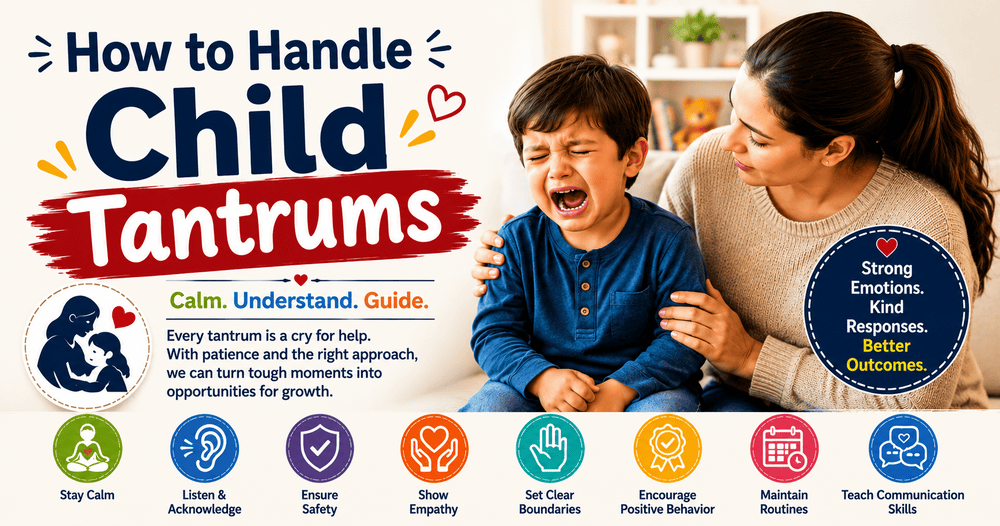
Child tantrums are a normal part of early childhood development and should not be viewed as a sign that a child is naughty or that parents are failing. Young children experience strong emotions but often lack the language, emotional control, and problem-solving skills needed to express those feelings appropriately. As a result, they may cry, scream, kick, or throw objects when they become frustrated or overwhelmed. Tantrums are most common between the ages of one and five years and gradually decrease as children develop better emotional and communication skills.
Why Do Children Have Tantrums?
Children have tantrums for many different reasons. They may become upset because they are hungry, tired, frustrated, or unable to communicate what they want. Sometimes a child becomes angry after being told “no” or when a favorite activity ends. Changes in routine, too much noise, crowded environments, or a desire for independence can also trigger emotional outbursts. Understanding the reason behind a tantrum helps parents respond with patience rather than anger.
Stay Calm During a Tantrum
The most important thing parents can do during a tantrum is to remain calm. Children often look to adults for emotional guidance, and if a parent responds by shouting or becoming angry, the child’s emotions usually become even stronger. Speaking in a gentle voice, maintaining a relaxed posture, and staying close to the child creates a sense of security. A calm parent helps a child learn how to regulate emotions in a healthy way.
Ensure the Child’s Safety
During a tantrum, safety should always be the first priority. If the child is throwing objects, hitting others, or trying to hurt themselves, parents should calmly remove dangerous objects and guide the child to a safe place. Physical punishment or aggressive behavior should never be used because it increases fear and frustration. A child needs protection and reassurance while learning to manage overwhelming emotions.
Acknowledge the Child’s Feelings
Children need to know that their feelings are understood, even when their behavior is unacceptable. Parents can calmly say, “I know you’re upset,” or “I understand you’re feeling angry.” Acknowledging a child’s emotions helps them feel heard and supported. It is important to remember that accepting a child’s feelings does not mean accepting inappropriate behavior.
Set Clear and Consistent Boundaries
While showing empathy, parents must also maintain clear and consistent rules. Children should learn that it is acceptable to feel angry or disappointed, but it is never acceptable to hit, bite, scream at others, or throw objects. Calmly explaining limits teaches children self-control and helps them understand appropriate ways to express their emotions.
Avoid Rewarding Tantrums
Parents should avoid giving children whatever they demand simply to stop a tantrum. If children learn that crying or screaming helps them get what they want, they are likely to repeat the behavior. Instead, parents should encourage calm communication and reward polite requests. Consistency helps children understand that positive behavior is more effective than emotional outbursts.
Teach Healthy Ways to Express Emotions
As children grow, parents should help them build emotional vocabulary by teaching words such as happy, sad, angry, frustrated, worried, and excited. Encouraging children to say, “I feel angry,” or “I need help,” helps replace tantrums with communication. Reading books, talking about feelings, and discussing emotions during everyday situations can strengthen emotional intelligence.
Maintain Healthy Daily Routines
Many tantrums can be prevented by maintaining regular daily routines. Children who get enough sleep, eat nutritious meals, enjoy regular physical activity, and have predictable schedules usually cope better with frustration. Limiting excessive screen time and allowing opportunities for rest and outdoor play also contribute to better emotional regulation.
Praise Positive Behaviour
Children respond well to positive reinforcement. Parents should notice and praise good behaviour such as sharing, waiting patiently, following instructions, or expressing feelings with words. Genuine praise encourages children to repeat positive actions and gradually reduces negative behaviour. Focusing on what children do well builds confidence and strengthens the parent-child relationship.
When to Seek Professional Help
Although tantrums are a normal part of childhood, parents should seek professional advice if tantrums become extremely violent, continue frequently after the age of five, involve self-harm, or interfere with the child’s daily life and development. A pediatrician or child psychologist can assess the situation and provide guidance if additional support is needed.
Conclusion
Handling child tantrums requires patience, empathy, and consistency. Every tantrum is an opportunity to teach children valuable life skills such as emotional regulation, communication, and self-control. By remaining calm, understanding the child’s feelings, setting clear boundaries, and providing positive guidance, parents can help their children develop into emotionally healthy, confident, and responsible individuals. With love, consistency, and supportive parenting, tantrums gradually become less frequent as children learn healthier ways to express their emotions.