
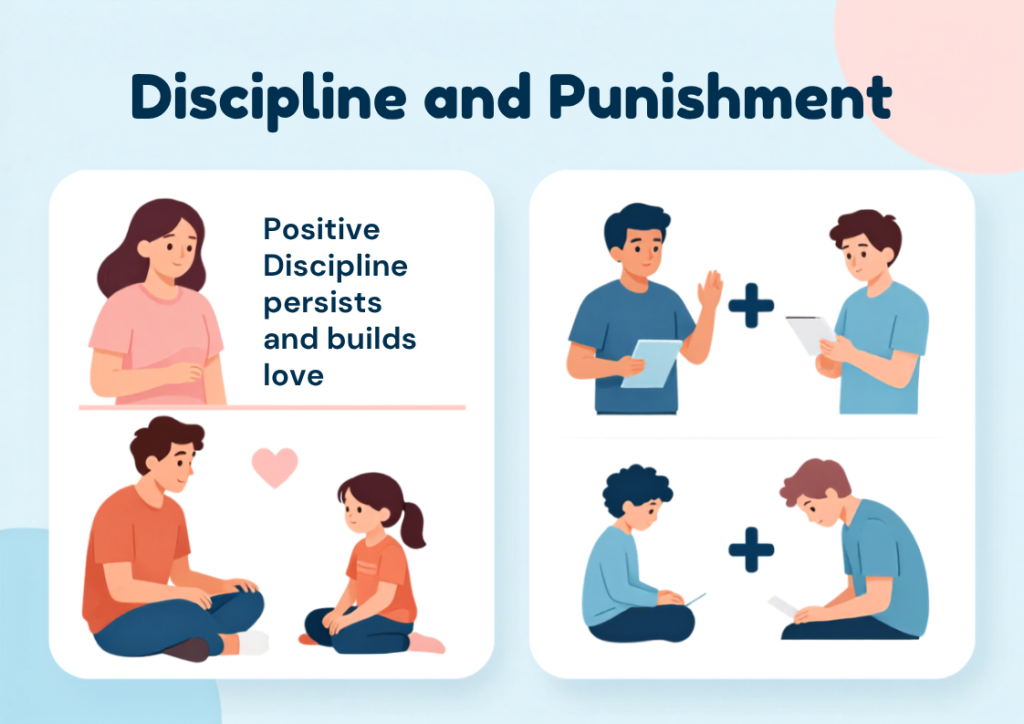
Every parent wants their child to grow into a responsible, respectful, and confident individual. However, guiding children toward positive behavior can be challenging, especially when they make mistakes or refuse to follow rules. Many parents believe that strict punishment is the fastest way to correct behavior, but research and experience show that harsh punishment often creates fear, anger, and emotional distance rather than genuine understanding.
Effective discipline is not about controlling children through fear. Instead, it is about teaching them self-control, responsibility, and respect. Positive discipline helps children understand the consequences of their actions while maintaining a healthy and loving relationship with their parents. When children feel respected and supported, they are more likely to listen, learn, and develop good habits.
This article explores practical and effective ways to discipline children without using harsh punishment.
Understanding the Difference Between Discipline and Punishment
Many people use the words “discipline” and “punishment” interchangeably, but they are very different.
What Is Punishment?
Punishment focuses on making a child suffer for a mistake. It may involve yelling, threats, humiliation, or physical punishment. While punishment may stop unwanted behavior temporarily, it does not always teach children how to behave better in the future.
What Is Discipline?
Discipline comes from the word “disciple,” which means to teach. The goal of discipline is to guide children toward making better choices. It helps them understand what went wrong, why it was wrong, and how they can improve their behavior.
When parents focus on teaching rather than punishing, children learn valuable life skills that stay with them for years.
Why Harsh Punishment Can Be Harmful
Harsh punishment may seem effective in the moment, but it can have negative long-term effects.
Creates Fear Instead of Understanding
Children may obey because they are afraid, not because they understand why a behavior is wrong.
Damages Self-Esteem
Constant criticism, shouting, or humiliation can make children feel worthless and insecure.
Increases Aggressive Behavior
Children often learn by observing adults. If they experience aggression, they may use aggression to solve their own problems.
Weakens Parent-Child Relationships
Fear-based discipline can reduce trust and communication between parents and children.
Reduces Emotional Security
Children need to feel safe and loved, even when they make mistakes. Harsh punishment can make them feel emotionally disconnected from their parents.
Set Clear Rules and Expectations
Children need clear guidance to understand what is expected of them.
Keep Rules Simple
Avoid creating too many rules. Focus on important behaviors such as:
- Speaking respectfully
- Completing homework
- Following safety rules
- Being kind to others
Explain the Reasons Behind Rules
Children are more likely to cooperate when they understand why rules exist.
For example:
Instead of saying, “Because I said so,” explain, “We hold hands while crossing the road because it keeps us safe.”
Make Expectations Age-Appropriate
Expectations should match a child’s age and abilities. Younger children need simpler instructions, while older children can handle more responsibility.
Use Positive Communication
The way parents communicate can greatly influence a child’s behavior.
Stay Calm
When children misbehave, it is natural to feel frustrated. However, responding calmly helps prevent conflicts from escalating.
Take a deep breath and speak in a firm but respectful tone.
Listen to Your Child
Children often act out because they feel misunderstood, tired, frustrated, or overwhelmed.
Listening carefully helps parents identify the root cause of the behavior.
Focus on Solutions
Instead of blaming the child, discuss how the problem can be fixed.
For example:
“What can we do differently next time?” is more productive than “Why are you always causing problems?”
Encourage Positive Behavior
Children respond well to encouragement and recognition.
Praise Specific Actions
Instead of saying:
“Good job.”
Say:
“I am proud of how you shared your toys with your sister.”
Specific praise helps children understand which behaviors are appreciated.
Celebrate Effort
Recognize hard work and improvement, not just results.
This teaches children that effort and persistence are valuable.
Use Positive Reinforcement
Rewards do not always need to be material. Extra playtime, hugs, compliments, and family activities can motivate positive behavior.
Natural and Logical Consequences
Consequences can teach responsibility without being harsh.
Natural Consequences
Natural consequences happen automatically.
For example:
If a child refuses to wear a coat, they may feel cold outside.
Logical Consequences
Logical consequences are connected to the behavior.
For example:
If a child throws toys, the toys may be put away temporarily.
The consequence should always be fair, reasonable, and related to the behavior.
Teach Problem-Solving Skills
Children need guidance to learn how to solve problems independently.
Help Children Think Critically
Ask questions such as:
- What happened?
- Why did it happen?
- What could you do differently next time?
Encourage Responsibility
Teach children to take ownership of their actions rather than making excuses.
Practice Decision-Making
Allow children to make age-appropriate choices and learn from the outcomes.
Be Consistent
Consistency is one of the most important elements of effective discipline.
Follow Through with Consequences
If parents make a rule, they should enforce it consistently.
Avoid Mixed Messages
Children become confused when rules change frequently.
Work as a Team
Parents and caregivers should agree on discipline strategies whenever possible.
Consistent expectations help children feel secure and understand boundaries.
Manage Your Own Emotions
Parents play a powerful role in shaping a child’s emotional behavior.
Model Respectful Behavior
Children learn by watching adults.
If parents remain calm and respectful during difficult situations, children are more likely to develop the same skills.
Avoid Reacting in Anger
Disciplining while angry often leads to decisions that parents later regret.
Taking a short break before responding can help maintain control.
Practice Patience
Learning appropriate behavior takes time. Mistakes are a normal part of a child’s development.
Build a Strong Parent-Child Relationship
A strong relationship makes discipline more effective.
Spend Quality Time Together
Children who feel connected to their parents are more likely to cooperate.
Show Unconditional Love
Children should know they are loved even when they make mistakes.
Create Open Communication
Encourage children to share their feelings and concerns without fear of judgment.
Trust strengthens the parent-child bond and improves behavior over time.
Discipline Strategies for Different Age Groups
Toddlers (1–3 Years)
- Use simple instructions.
- Redirect unwanted behavior.
- Maintain routines.
- Offer limited choices.
Preschoolers (3–5 Years)
- Explain simple rules.
- Use praise frequently.
- Introduce logical consequences.
- Encourage sharing and cooperation.
School-Age Children (6–12 Years)
- Involve them in problem-solving.
- Set clear responsibilities.
- Encourage accountability.
- Discuss consequences calmly.
Teenagers (13–18 Years)
- Respect their growing independence.
- Maintain open communication.
- Set reasonable boundaries.
- Focus on guidance rather than control.
Common Discipline Mistakes to Avoid
Yelling Frequently
Frequent yelling reduces its effectiveness and may increase resistance.
Comparing Children
Comparisons can harm self-esteem and create sibling rivalry.
Using Shame or Humiliation
Children should never be embarrassed as a form of discipline.
Being Inconsistent
Changing rules and consequences creates confusion.
Expecting Perfection
Children are still learning and will make mistakes along the way.
The Long-Term Benefits of Positive Discipline
Positive discipline provides benefits that extend far beyond childhood.
Children learn:
- Self-control
- Responsibility
- Respect for others
- Emotional intelligence
- Problem-solving skills
- Confidence
- Healthy communication
These qualities help children succeed in school, relationships, and future careers.
Conclusion
Disciplining children without harsh punishment is not about being permissive or ignoring bad behavior. It is about teaching, guiding, and helping children develop the skills they need to make better choices. Through clear expectations, positive communication, consistent boundaries, and respectful consequences, parents can create an environment where children feel safe, valued, and motivated to learn.
Every child makes mistakes, and every mistake presents an opportunity for growth. When parents focus on understanding rather than punishment, they build stronger relationships with their children and encourage lifelong habits of responsibility, respect, and self-discipline. Positive discipline takes patience and consistency, but its rewards can last a lifetime, helping children become confident, caring, and capable adults.