
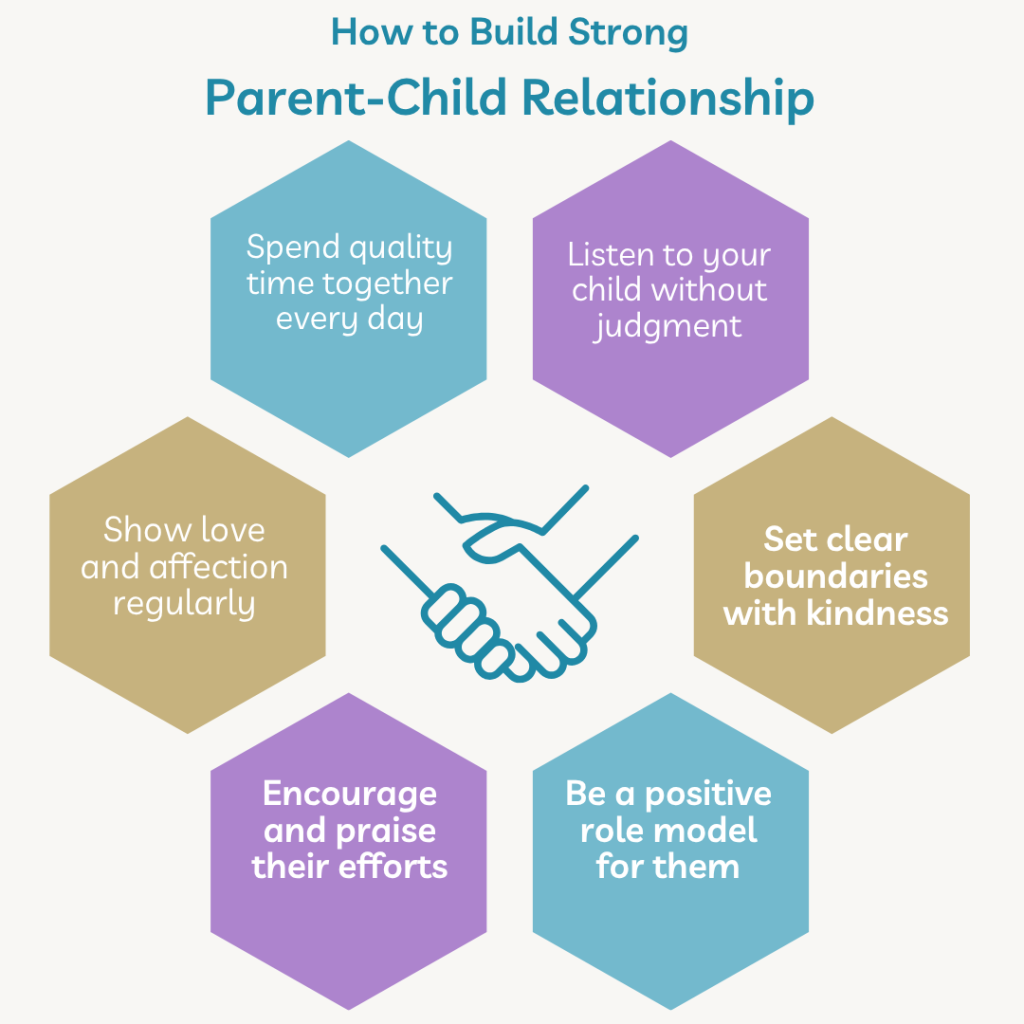
A strong parent-child relationship is the foundation of a child’s emotional stability, confidence, behavior, and future success. Children who grow up in a supportive and emotionally connected environment are more likely to become confident, responsible, and mentally strong individuals.
In today’s fast-paced world, many parents struggle to maintain a close relationship with their children due to busy routines, technology distractions, academic pressure, and communication gaps.
Building a strong relationship is not about strict rules or control. It is about trust, understanding, emotional connection, and consistent positive interaction.
This guide explains in detail how to build a strong parent child relationship step by step using practical, psychological, and real-life parenting strategies.
Understanding Parent Child Relationship
A parent-child relationship refers to the emotional and behavioral connection between a parent and their child. It includes trust, communication, emotional support, discipline, and shared experiences.
A healthy relationship is built on:
- Trust
- Love
- Communication
- Respect
- Emotional support
When these elements are strong, children feel safe, confident, and valued.
Child behavior development is directly influenced by the quality of this relationship. A positive relationship improves emotional development in children and builds strong self-esteem.
Why Parent Child Relationship is Important
A strong parent-child relationship plays a crucial role in shaping a child’s personality and future.
Children who feel emotionally connected to their parents:
- Perform better in studies
- Show better behavior
- Develop higher confidence
- Handle stress better
- Build stronger social skills
On the other hand, weak relationships can lead to:
- Low confidence in kids
- Behavioral issues
- Emotional insecurity
- Communication gaps
- Lack of motivation
That is why building a strong connection is essential for healthy development.
Barriers to Strong Parent Child Relationship
Many parents face challenges in building strong relationships with their children.
One major barrier is lack of time. Busy schedules reduce quality interaction between parents and children.
Another barrier is excessive use of mobile phones and digital devices, which reduces face-to-face communication.
Strict parenting styles can also create emotional distance.
Misunderstanding children’s emotions and focusing only on discipline can weaken the bond.
Lack of active listening is another major issue that creates communication gaps.
Psychology Behind Parent Child Bonding
From a psychological perspective, children build emotional bonds based on trust and consistent interaction.
Children feel emotionally secure when they are:
- Listened to
- Understood
- Supported
- Encouraged
Attachment theory in psychology explains that early emotional bonds shape future relationships and behavior patterns.
When children feel safe with parents, they develop strong emotional stability and confidence.
How to Build Strong Parent Child Relationship Step by Step
Step 1: Spend Quality Time Daily
Quality time is more important than quantity of time.
Even 20–30 minutes of focused attention can strengthen the relationship.
During this time, parents should avoid distractions and fully engage with the child.
Step 2: Improve Communication
Communication is the foundation of any strong relationship.
Parents should talk to children daily about:
- Their feelings
- Their school life
- Their thoughts
- Their problems
Active listening is more important than giving advice.
Step 3: Show Emotional Understanding
Children need emotional validation.
Instead of ignoring feelings, parents should acknowledge them.
For example, if a child is upset, parents should say that they understand how the child feels.
Step 4: Avoid Excessive Criticism
Constant criticism damages trust and emotional connection.
Instead of focusing on mistakes, parents should focus on improvement.
Positive feedback encourages better behavior.
Step 5: Build Trust Through Consistency
Trust is built when parents are consistent in behavior, promises, and reactions.
If parents are unpredictable, children may feel insecure.
Consistency builds emotional safety.
Step 6: Encourage Open Expression
Children should feel free to express their thoughts without fear.
Parents should create an environment where children can speak openly.
This improves emotional development in children.
Step 7: Be a Role Model
Children learn more from observation than instruction.
Parents should demonstrate:
- Respect
- Calm behavior
- Responsibility
- Honesty
Activities to Strengthen Parent Child Relationship
1. Family Conversations
Daily conversations improve understanding and trust.
2. Shared Activities
Cooking, playing games, or reading together strengthens bonding.
3. Story Sharing
Sharing experiences builds emotional connection.
4. Outdoor Time
Walking or playing together improves communication.
5. Problem-Solving Together
Involving children in decisions builds respect and trust.
Real-Life Example
A 12-year-old child had communication issues with parents and often avoided talking at home. The relationship was weak due to lack of emotional connection and busy routines.
The parents decided to change their approach. They started spending 30 minutes daily with the child without distractions. They also began listening without judgment and reduced criticism.
Within a few weeks, the child started opening up more, sharing thoughts, and improving behavior.
This shows that consistent emotional effort can rebuild relationships.
Common Mistakes Parents Make
One common mistake is focusing only on discipline and ignoring emotional connection.
Another mistake is not listening to children properly.
Excessive use of mobile phones during family time reduces bonding.
Comparing children with others also damages relationships.
Ignoring emotional needs is another serious issue.
Expert Parenting Strategies
Experts suggest that emotional connection is more important than control.
Parents should focus on:
- Understanding instead of reacting
- Listening instead of judging
- Guiding instead of controlling
- Supporting instead of criticizing
Positive parenting strategies help build long-term trust.
Child Motivation and Emotional Development
A strong parent-child relationship directly improves motivation and emotional strength.
Children feel more motivated when they feel supported.
Emotional development in children improves when they feel understood and valued.
Frequently Asked Questions
How to build strong parent child relationship
By spending quality time, improving communication, and showing emotional support.
Why is parent child relationship important
It builds confidence, emotional stability, and positive behavior.
How can parents improve bonding with children
By active listening, shared activities, and emotional understanding.
What weakens parent child relationship
Criticism, lack of time, and poor communication.
Conclusion
Building a strong parent child relationship is one of the most important responsibilities of parenting. It is not built overnight but developed through daily communication, emotional support, trust, and shared experiences.
When parents focus on understanding, listening, and connecting emotionally, children naturally become more confident, disciplined, and emotionally strong.
A strong relationship creates a foundation for lifelong trust and success.
Call to Action
MotherChild.Care helps parents with:
Parenting guidance programs
Child behavior development
Confidence building in children
Emotional development support
Contact us:
Email: info@motherchild.care