
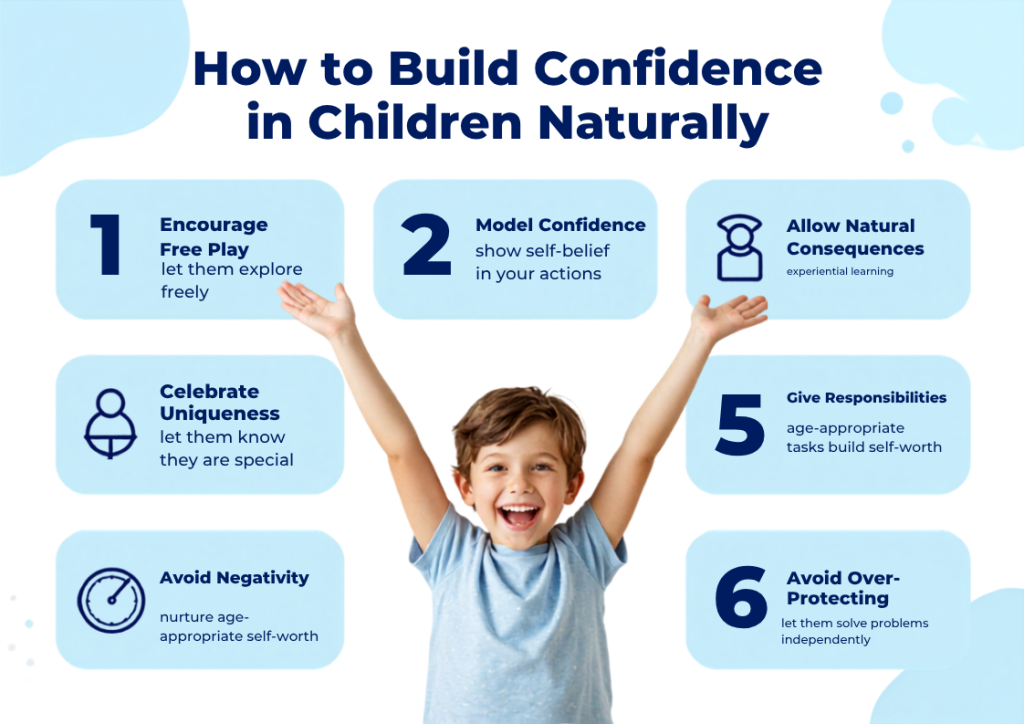
Building confidence in children is one of the most important responsibilities of parents, teachers, and guardians. Confidence is not something that develops automatically. It is shaped through daily experiences, communication, emotional support, and the environment a child grows in.
Many parents today are worried about their children because they notice signs such as shyness, fear of speaking, low self-esteem, lack of participation in school, and dependence on others for small decisions. These issues are becoming more common due to modern lifestyle changes, increased screen time, academic pressure, and reduced emotional interaction within families.
When parents search for how to build confidence in children naturally, what they are really looking for is a long-term solution that does not involve pressure, punishment, or unrealistic expectations. Instead, they want practical, gentle, and effective parenting methods that help children grow emotionally strong.
This article explains in detail how confidence develops in children and how parents can naturally build it step by step in daily life.
Understanding Confidence in Children
Confidence in children refers to their belief in their own abilities. It is the inner feeling that “I can try, I can learn, and I can improve.” A confident child is not someone who never makes mistakes, but someone who is not afraid of making mistakes.
From a psychological perspective, confidence is closely linked to self-esteem and emotional development. Self-esteem in children is formed through repeated experiences of acceptance, appreciation, encouragement, and independence.
When children feel valued, they naturally develop confidence. When they feel criticized or ignored, their confidence weakens.
Child behavior development is strongly influenced by early interactions with parents. The tone of communication, emotional responses, and level of support play a major role in shaping how a child sees themselves.
Causes of Low Confidence in Kids
Low confidence in children does not develop overnight. It is usually the result of repeated emotional experiences.
One major cause is constant criticism. When children are frequently corrected or told they are wrong, they begin to doubt their abilities.
Another cause is comparison. Many parents compare their child with siblings or other students. This creates emotional pressure and reduces self-worth.
Overprotective parenting also plays a role. When children are not allowed to try things on their own, they become dependent and unsure of their abilities.
Lack of emotional attention is another important factor. Children who do not feel heard or understood often develop low confidence and emotional insecurity.
Fear-based discipline is also harmful. When children are punished harshly, they may stop trying new things to avoid mistakes.
How to Build Confidence in Children Naturally Step by Step
Building confidence naturally requires consistency, patience, and emotional understanding.
The first step is creating emotional safety. Children must feel that home is a place where they are accepted without judgment. When children feel safe, they become more open and expressive.
The second step is focusing on effort instead of results. Instead of praising only success, parents should appreciate effort, improvement, and persistence. This helps children develop a growth mindset.
The third step is giving children small responsibilities. Simple tasks such as organizing their belongings, helping in household work, or managing school routine help them develop independence.
The fourth step is allowing children to make small decisions. Decision-making builds confidence because it teaches children that their choices matter.
The fifth step is allowing safe failure. Children should be given the freedom to make mistakes and learn from them. Failure is an important part of emotional development in children.
The sixth step is avoiding negative labeling. Words like lazy, shy, or weak should be avoided because children often internalize these labels.
The seventh step is improving communication. Regular conversations help children express their thoughts and feelings, which is essential for confidence building.
Child Confidence Building Activities
Child confidence building activities play an important role in natural development.
One important activity is storytelling. When children are encouraged to tell stories, they develop communication skills and imagination.
Another effective activity is role play. Children can act as teachers, doctors, or leaders. This helps them explore different roles and builds self-expression.
Confidence building exercises for kids also include public speaking practice. Even speaking in front of family members helps reduce fear.
Creative activities such as drawing, writing, and crafts also help children express themselves freely.
Group activities help children develop social confidence and teamwork skills. These experiences are essential for emotional development in children.
Real-Life Example
A young child who was extremely shy and hesitant to speak in school was observed by his parents. They noticed that he avoided eye contact and rarely participated in class activities.
Instead of forcing him, the parents changed their approach. They started encouraging him gently, gave him small responsibilities at home, and created a safe emotional environment.
They also practiced daily conversations where the child was encouraged to express his thoughts freely without fear of correction.
After a few months, the child slowly started gaining confidence. He began speaking in class, interacting with friends, and showing more interest in learning activities.
This example shows that confidence building in children is a gradual process that requires patience and consistent support.
Common Mistakes Parents Make
Many parents unintentionally reduce their child’s confidence.
One common mistake is over-controlling. When children are not allowed to make decisions, they lose independence.
Another mistake is constant criticism. Continuous correction without encouragement affects self-esteem in children.
Comparison with other children is also harmful because it creates insecurity and pressure.
Ignoring emotional needs is another serious mistake. Children need emotional support as much as academic guidance.
Expert Parenting Strategies
Positive parenting strategies are essential for long-term confidence building.
Parents should focus on encouragement rather than pressure. Children respond better to support than criticism.
They should allow independence in daily tasks so that children learn responsibility.
Emotional connection should be prioritized over strict discipline.
Parents should also celebrate small achievements because small wins build strong confidence over time.
Child motivation techniques such as appreciation, support, and involvement help children stay active and engaged.
Activities for Confidence Development
There are several practical confidence building exercises for kids that parents can use at home.
Daily conversation practice helps children improve communication.
Storytelling improves imagination and expression.
Role-playing activities help children build leadership qualities.
Creative arts allow emotional expression.
Small responsibility tasks help children become independent.
These child confidence building activities should be done regularly for best results.
FAQ Section
How can I increase self confidence in my child naturally
You can increase self confidence in a child by giving emotional support, encouraging independence, and appreciating effort instead of focusing only on results.
What causes low confidence in kids
Low confidence in kids is usually caused by criticism, comparison, lack of attention, and overprotective parenting.
What are the best parenting tips for confidence
The best parenting tips include positive communication, emotional support, allowing independence, and encouraging effort-based learning.
Can shy children become confident
Yes, with consistent support, shy children can gradually become confident through practice and positive experiences.
Conclusion
Building confidence in children naturally is a long-term process that requires patience, understanding, and emotional support. Confidence is not created through pressure or punishment, but through encouragement, trust, and consistent positive experiences.
When parents focus on emotional safety, independence, and positive reinforcement, children naturally develop strong self-esteem and confidence. These qualities help them succeed not only in academics but also in life.
Call to Action
MotherChild.Care is dedicated to helping parents and children with structured programs focused on confidence building, emotional development, study success, and parenting guidance.
If you want professional support for your child’s growth and behavior development, you can contact us.
Email: info@motherchild.care