
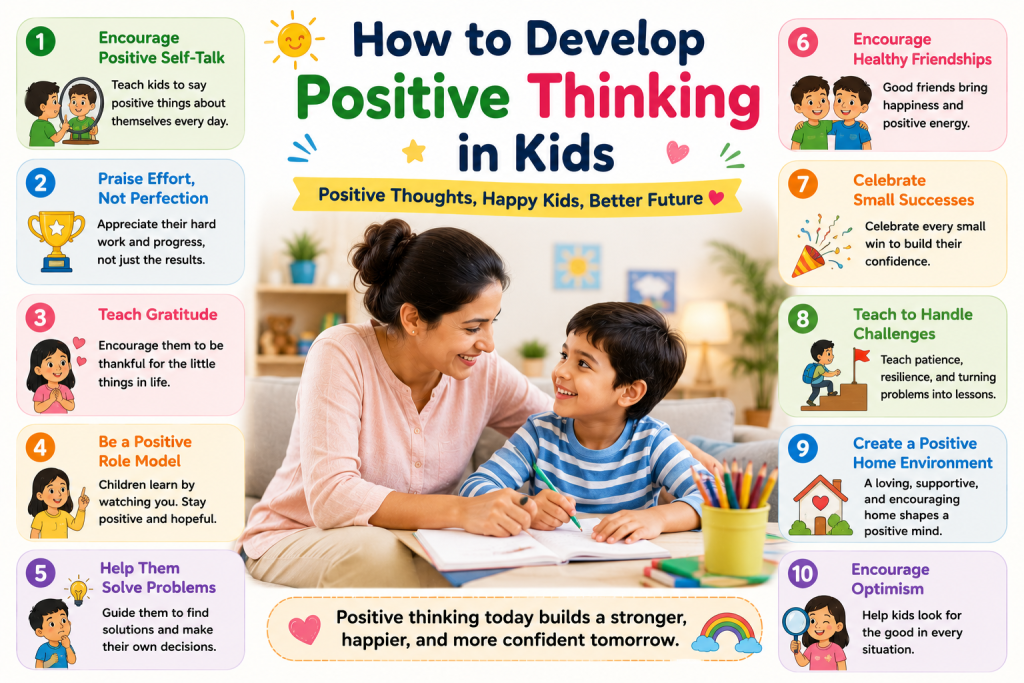
Positive thinking is one of the most valuable life skills a child can develop. It helps children face challenges with confidence, believe in their abilities, and stay motivated even when things do not go as planned. A positive mindset does not mean ignoring problems. Instead, it means teaching children to look for solutions, learn from mistakes, and believe that every challenge is an opportunity to grow.
Parents, teachers, and caregivers all play an important role in shaping a child’s attitude toward life. Children often learn by watching the adults around them, so the words, actions, and encouragement they receive every day have a lasting impact. By creating a supportive environment and teaching healthy thinking habits, adults can help children become more confident, resilient, and emotionally strong.
This article explores practical ways to develop positive thinking in kids and build a strong foundation for their future success and happiness.
Encourage Positive Self-Talk
The way children talk to themselves influences how they see their abilities and respond to challenges. If a child constantly thinks, “I can’t do this,” they may lose confidence before even trying. Parents and teachers can help replace these negative thoughts with encouraging statements such as, “I can learn,” “I will keep trying,” or “Mistakes help me improve.”
Regularly reminding children of their strengths and achievements helps them develop healthy self-confidence. Over time, positive self-talk becomes a habit that allows children to face difficulties with courage and determination.
Praise Effort Instead of Perfection
Children need to understand that success comes from effort, practice, and perseverance rather than being perfect. Instead of praising only good grades or perfect results, appreciate the hard work they put into completing a task. Saying, “I’m proud of how hard you worked,” encourages children to keep learning and improving.
When children realize that mistakes are a natural part of learning, they become less afraid of failure. This growth mindset helps them remain positive and motivated even when they face challenges.
Teach Children to Be Grateful
Gratitude helps children focus on the good things in their lives instead of only noticing what they do not have. Parents can encourage gratitude by asking children to share something they are thankful for each day. These simple conversations help children develop a more positive outlook and appreciate everyday moments.
Practicing gratitude also improves emotional well-being and strengthens relationships with family and friends. Children who regularly express appreciation often become happier, kinder, and more optimistic.
Be a Positive Role Model
Children learn more from what adults do than from what they say. Parents and teachers who remain calm during difficult situations, speak kindly about others, and maintain a hopeful attitude teach children how to think positively through their own example.
Showing children how to solve problems with patience and confidence demonstrates that challenges can be overcome. By modeling optimism in everyday life, adults encourage children to develop the same healthy mindset.
Help Children Solve Problems
Instead of solving every problem for children, guide them through the process of finding solutions. Ask questions such as, “What do you think we can do?” or “Can you think of another way to solve this?” These conversations encourage children to think independently and build confidence in their decision-making abilities.
Problem-solving teaches children that obstacles are temporary and that there is usually more than one solution. This mindset reduces frustration and promotes resilience.
Encourage Healthy Friendships
The people children spend time with can greatly influence their attitude and behavior. Encourage friendships with children who are kind, supportive, and respectful. Positive friendships help children feel accepted and confident while teaching important social skills such as cooperation, empathy, and communication.
Parents should also talk openly with children about treating others with kindness and choosing friends who encourage positive behavior. Healthy relationships contribute to emotional well-being and a positive outlook on life.
Celebrate Small Successes
Every achievement, no matter how small, deserves recognition. Celebrating progress motivates children to keep trying and reminds them that their efforts matter. Whether they learn a new skill, complete a difficult assignment, or show kindness to someone, acknowledging these moments builds confidence and encourages continued growth.
Simple words of encouragement, hugs, certificates, or family celebrations can make children feel proud of themselves. These positive experiences strengthen their belief that they are capable of achieving their goals.
Teach Healthy Ways to Handle Challenges
Life will always include disappointments and setbacks, but children can learn healthy ways to manage them. Encourage children to talk about their feelings, take deep breaths, and think about possible solutions instead of giving up. Remind them that every challenge provides an opportunity to learn something new.
Teaching resilience helps children recover more quickly from difficulties. As they gain experience overcoming obstacles, they become more confident and optimistic about handling future situations.
Create a Positive Home Environment
A loving and supportive home gives children the confidence to express themselves without fear of criticism. Encourage open communication, spend quality time together, and celebrate each family member’s achievements. Positive words, laughter, and shared activities help children feel safe and emotionally secure.
Limiting unnecessary negativity and focusing on encouragement creates an atmosphere where children naturally develop hopeful attitudes. A positive home environment supports both emotional well-being and healthy personal development.
Conclusion
Developing positive thinking in kids is a lifelong process that begins with everyday conversations, encouragement, and meaningful experiences. By teaching positive self-talk, praising effort, practicing gratitude, solving problems together, and creating a supportive environment, parents and teachers can help children develop confidence, resilience, and emotional strength.
Children who think positively are more likely to face challenges with courage, build healthy relationships, and enjoy learning throughout their lives. By nurturing optimism from an early age, we prepare children not only for academic success but also for a happier, healthier, and more successful future.